What to tell a florist when you do not know what you want
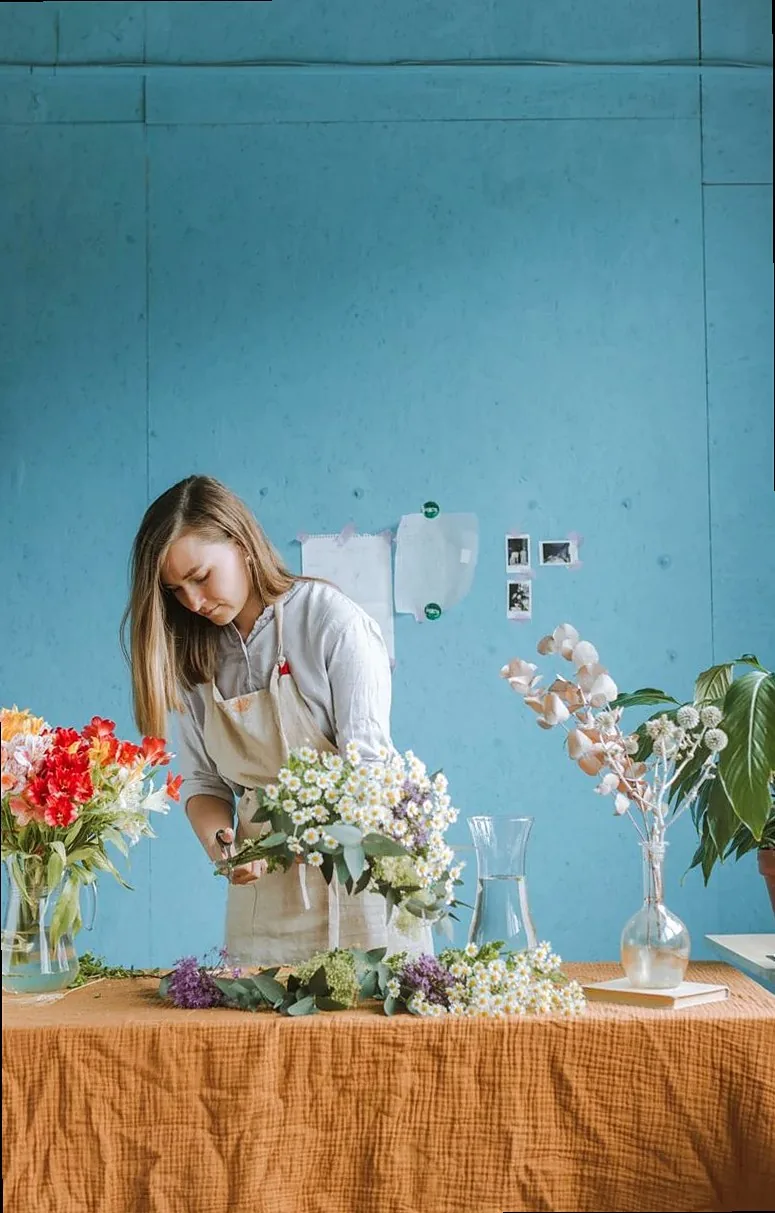
A customer came in last spring carrying a screenshot of a hotel lobby — marble floors, low amber light, a single enormous arrangement in the corner that was mostly foliage. She pointed at it and said: "I want that feeling." That is, genuinely, one of the most useful briefs we receive. The difficulty is not that customers do not know what they want; the difficulty is that most people assume a florist needs exact flower names and stem counts before anything useful can happen. What actually helps is a different set of information entirely, and it takes about three minutes to gather.
Start with the room, not the flower
Before any stem is chosen, a florist is trying to solve a placement problem. An arrangement that reads beautifully on a kitchen island in a terraced house in Edinburgh will disappear on a long refectory table in a Glasgow function suite. The ceiling height, the surface colour, the ambient light — these are the variables that determine scale and silhouette far more reliably than a preference for roses over dahlias. When someone says 'something tall and dramatic,' that instruction only becomes actionable once the florist knows whether the vase is sitting at eye level or being viewed from across a room.
Describing the container helps enormously, even roughly. Wide-mouthed ceramic bowl, narrow-necked glass bottle, a borrowed pewter jug from a grandmother's dresser — each one changes the flower-to-stem ratio, the amount of foliage that makes structural sense, and whether the arrangement needs to hold a tight focal point or can sprawl. If a container has not been chosen yet, saying so is equally useful, because it opens a conversation about what the florist actually has in the workshop that week.
The information that actually changes what gets ordered
Florists order stock two to four days ahead of most arrangements, which means a vague 'I'll know it when I see it' brief creates a real supply problem. The five things that genuinely shift what arrives at the flower market are: the date the arrangement needs to be ready, the rough budget (a range is fine), the intended lifespan (a one-day wedding installation versus a week on a dining table are totally different specifications), any hard colour exclusions rather than preferences, and whether scent matters.
Scent is the most underrated variable. Hyacinths and Oriental lilies carry across a large room; sweet peas and garden roses are intimate, closer-range flowers. In a venue with elderly guests or young children, strong fragrance can be a genuine problem. Florists at markets like the New Covent Garden Flower Market or Glasgow's wholesale sheds plan their weekly buys partly around these considerations, and knowing a client's scent position saves a substitution conversation later in the week.
- Date needed — including setup time if it is an event
- Budget as a range, not an exact figure
- Lifespan: one occasion or several days on display
- Hard colour exclusions (e.g. no white, nothing orange)
- Scent tolerance: strong, light, or none
- Whether the arrangement will be photographed
How to translate a feeling into workable language
The hotel lobby screenshot approach works precisely because it bypasses flower vocabulary and goes straight to visual grammar. Texture density (is the image packed or spacious?), tonal range (high contrast or monochrome?), and the ratio of flower to foliage to negative space are all things a florist can read from a photograph and translate directly into a shopping list. Three reference images from completely different contexts — a fashion editorial, a still-life painting, a restaurant interior — are more useful than twenty pictures of bouquets, because the overlapping qualities across very different images identify what the client is actually responding to.
Seasonal framing helps when imagery is not available. Saying 'it should feel like early September in a Scottish garden' is specific enough to suggest palette (soft purples, dusty pinks, the first turning foliage) and structure (loose, cottage-garden, nothing too architectural). Florists who have worked through several full growing seasons carry a detailed internal picture of what each month looks and feels like at the wholesaler, and language like this maps directly onto that knowledge.
What does not help: naming a single flower with no context. 'I want sunflowers' as a complete brief leaves every meaningful decision — scale, companion flowers, container, structure — entirely open, and the result is often a generic filler arrangement rather than something considered. A named flower is a starting point, not a brief.
Three reference images from completely different contexts tell a florist more than twenty bouquet photographs ever will.
A practical recap before the call or visit
Gathering this information before contacting a florist takes less time than most people expect, and it makes the conversation faster and the result more accurate. The points below are not a checklist so much as a prompt to think about the arrangement as a spatial and temporal object, not just a collection of favourite flowers.
- Where will it sit, and at what height relative to the viewer
- What is the container, or should the florist suggest one
- What is the occasion and when is it needed
- What is the budget range
- Three reference images showing the visual feeling, not necessarily flowers
- Any hard exclusions: colour, scent, specific flowers
The most productive florist conversations tend to start not with flowers at all but with a place, a date, and a feeling — and the flower names arrive at the end, almost as a footnote. Simple Willow Works takes briefs by phone, email, or in person at the studio in Edinburgh; most initial conversations run under ten minutes once both sides know what information actually matters.