Garden party flowers: how to plan for heat, wind and a long day
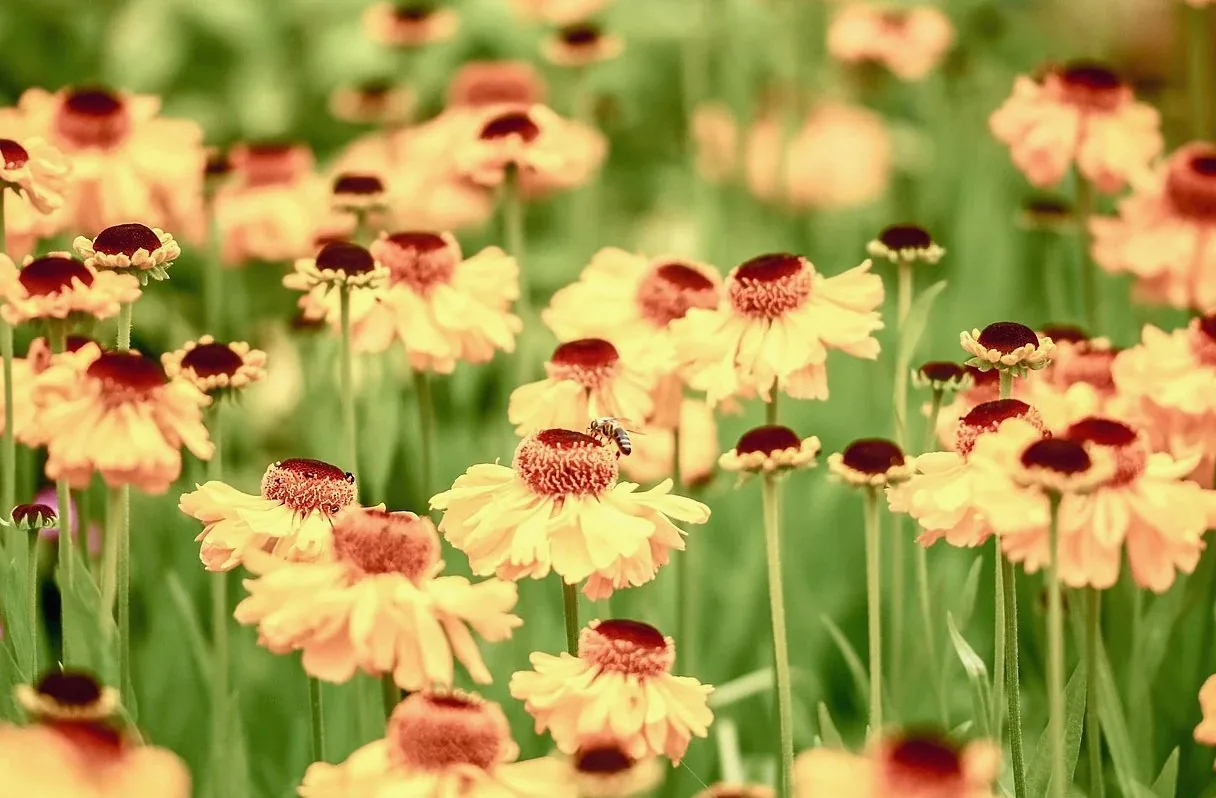
A marquee goes up on a Friday morning in late July, the florist arrives at seven, and by two in the afternoon the dahlias in the low centrepieces have started to nod. Nobody panicked, but everyone noticed. Outdoor event floristry operates under a different set of pressures than a Saturday wedding in a stone church or a corporate installation in a temperature-controlled atrium: the variables are genuinely uncontrollable, and the margin for error is compressed into whatever hours separate setup from the moment guests arrive. Heat accelerates every biological process a cut flower is already fighting. Wind turns a tall arrangement into a lever, multiplying the force on every stem and every vessel base. And a garden party that starts at noon and runs to dusk asks flowers to perform for six, eight, sometimes ten hours without refrigeration, fresh water or intervention. The floristry decisions that determine whether an outdoor event looks extraordinary at 6pm are almost entirely made in the week before it, not on the day itself.
Reading the site before ordering a single stem
The most consequential piece of outdoor event planning happens at a site visit, ideally at the same time of day the event will run. A garden that faces southwest will be in full direct sun from roughly midday onward through a British summer afternoon, meaning any arrangement placed on a table along the west-facing perimeter will absorb several hours of intense radiant heat. Shade patterns from buildings, mature trees and temporary structures shift significantly between morning setup and peak afternoon sun, and a florist who has only seen photographs will guess at those patterns rather than know them. Walking the site with a compass app and spending twenty minutes watching where the wind funnels through gaps in hedging or between marquee panels is worth more than any amount of mood-boarding.
From that visit comes a shortlist of micro-environments: the shaded trestle near the yew hedge that can hold delicate sweet peas, the exposed round tables in the centre of the lawn that need low, robust arrangements, the drinks station against the south-facing wall where anything taller than thirty centimetres will catch the afternoon breeze. Treating the outdoor site as a set of distinct zones, each with its own heat and wind profile, is the practical starting point for all subsequent decisions about stem selection, vessel type and water management.
Vessel choice: weight, width and the physics of wind
Tall glass cylinders are popular partly because they are beautiful and partly because they are cheap to source in bulk. Outdoors, they are a liability. A cylinder with a narrow base and a high centre of gravity will tip in a moderate breeze, and the taller the arrangement the more sail area it presents. The general rule for outdoor vessels is that the base diameter should be at least a third of the total finished height of the arrangement. A forty-centimetre column of flowers needs a vessel with a base footprint of at least thirteen centimetres — which in practice means moving toward wide-mouthed ceramic crocks, squat terracotta pots, or heavy stone urns rather than slender glass.
Weight is a genuine advantage outdoors in a way it rarely is indoors. A glazed stoneware crock weighing two kilograms empty is awkward to transport and set up, but once it is on a table it resists tipping far better than a one-litre glass vessel. For tablescapes that require lighter vessels — bud vases, small glass bottles in clusters — the answer is mechanical rather than gravitational: grouping three or five vessels together on a wooden board or slate tile creates a raft that is harder to dislodge than any individual piece. Florists working outdoor events regularly also tend to keep a supply of florist's fix or museum putty specifically for adhering lighter vases to tabletops when conditions warrant it.
Water management across a long outdoor day
Cut flowers drink faster in heat and lose moisture through their petals faster still when the air is dry or moving. A stem that would last three days in a cool indoor room may show stress within four hours on a sun-exposed garden table in August. The standard practice of conditioning flowers in deep water in a cool space for twelve to twenty-four hours before the event is the single most important preparation step, and it is not negotiable for outdoor work. Stems that have had adequate conditioning time have fully hydrated cells and close stomata more efficiently than stems that were conditioned for six hours because the order arrived late.
On the day, every vessel should be filled to capacity immediately before placement, not during setup an hour earlier. Where arrangements use floral foam — and its use is increasingly restricted for good environmental reasons, with many florists now working exclusively with chicken wire, pin frogs and water-filled vessels — the foam must be fully saturated before shaping begins, since partially wet foam creates dry pockets that accelerate stem death. For arrangements that will run beyond five hours outdoors, a practical interim measure is to carry a watering can or squeeze bottle and top up vessels discreetly between courses or during a transition in the programme. This is worth building into the event-day schedule explicitly, with a named person responsible.
Flowers that are particularly vulnerable outdoors include ranunculus in high heat, large-headed roses in direct sun, and anything with thin or papery petals such as anemones or Icelandic poppies. Flowers with notably better outdoor endurance include hydrangeas when well-conditioned, chrysanthemums, carnations, most alliums, and woody-stemmed dahlias — though dahlias wilt fast if their stems are not recut and placed in deep water within minutes of harvest or delivery.
Timing the build: what goes in first and what goes in last
A common error in outdoor event floristry is treating the build as a single operation rather than a sequence with deliberate staging. Large structural pieces — urn arrangements at entrances, arch or pergola installations, any floristry that requires ladders or scaffold boards — must go in first, because they involve movement of people and equipment that will inevitably disturb anything already in place. Tabletop arrangements and bud vases go in last, as close to guest arrival time as the schedule allows.
For a noon arrival, a realistic build timeline begins at seven or eight in the morning for structural pieces, with tabletops not placed until ten-thirty or eleven at the earliest. That two-to-three-hour gap matters because it limits the time delicate stems spend in outdoor conditions before anyone sees them. If the event does not start until six in the evening, the calculus shifts: structural work can begin in the early afternoon, but centrepieces should not go out before three or four, even if that creates pressure on the florist's schedule. Experienced outdoor florists build this timeline constraint into their event quotes and briefs from the start, so that catering and events teams are not expecting a fully dressed venue at eight in the morning for a six-in-the-evening party.
When the weather changes: a practical contingency list
British summer weather is variable enough that any outdoor event brief should include a documented contingency plan agreed between the florist, the event planner and the client. This does not need to be elaborate, but it does need to exist before the day, because decisions made under time pressure with a marquee flapping in thirty-kilometre-per-hour gusts are rarely good ones.
The most useful contingencies to have agreed in advance are:
- A threshold wind speed at which tall or top-heavy arrangements move indoors or are replaced with low alternatives already in reserve.
- A rain protocol: which vessels and surfaces can tolerate wet conditions, and which tablecloths or surfaces need covering before the floristry goes out.
- A named person on-site with access to the florist's reserve stock — spare vessels, a bucket of conditioned filler stems, florist's tape and fix.
- A shading arrangement for the most exposed arrangements if the afternoon runs significantly hotter than forecast — even a market umbrella repositioned over a centrepiece table buys meaningful time.
- Agreement on which elements are decorative and can be removed without affecting the event (entrance arch fillers, scattered petals on tablecloths) versus structural pieces that are load-bearing or integral to the design.
Stem selection as a structural decision, not just an aesthetic one
The flowers chosen for an outdoor event should be selected partly on stem strength and petal resilience, not only on colour palette or seasonal availability. This sometimes requires a conversation with clients who have fallen in love with a mood board full of garden roses and sweet peas — both beautiful, both genuinely challenging to hold in outdoor heat. The editorial work a florist does in that conversation is to redirect toward varieties that have similar visual character but better physical performance: spray roses in place of garden roses, which have smaller heads and more structural petals; scabiosa or nigella instead of anemones for that open, delicate look; eucalyptus and ruscus for foliage that holds its colour and shape through heat rather than wilting like soft pittosporum.
Locally grown, seasonally appropriate stems also tend to outperform imported counterparts in outdoor conditions because they have not spent four to seven days in refrigerated transit before conditioning. A dahlia cut from a farm in Lincolnshire or Kent and used within two days of harvest is physiologically different from a dahlia that has been boxed, chilled, flown and delivered over a week. The difference shows after hour four on a warm afternoon.
The most reliable outdoor arrangements combine structural foliage that provides shape and wind resistance — think branches of flowering eucalyptus, dried seed heads, or woody herbs such as rosemary and lavender — with blooms concentrated toward the centre of the arrangement where they are most sheltered and least exposed to direct airflow. It is a different compositional logic than the loose, all-over abundance that reads beautifully in a controlled interior, and developing an eye for that distinction is probably the core skill of outdoor event floristry.
The floristry decisions that determine whether an outdoor event looks extraordinary at 6pm are almost entirely made in the week before it, not on the day itself.
Outdoor event floristry is a discipline that rewards advance preparation and penalises improvisation more severely than almost any other branch of the craft. The variables — heat, wind, time, the particular physics of each site — are not problems to be solved on the day but parameters to be planned around in the days before. Which raises the question that any florist working this kind of event eventually has to answer for themselves: at what point does the demand for outdoor resilience start to reshape the aesthetic possibilities, and is the result still the work they want to make?