What is actually in season in September in the UK?
The most common mistake people make when ordering flowers for a September event is trusting a wholesaler's availability list as if it were a crop report. It is not. A September price list in the UK can quietly contain peonies cut in May, sweet peas picked in June, and ranunculus that left a Dutch glasshouse before Wimbledon. Those flowers are not 'available' in any seasonal sense — they have been held in controlled-atmosphere cold stores at around 1–2°C and released slowly onto the market to extend their commercial window. The cost of that confusion is real: arrangements built on stored stock behave differently, vase life is compressed, and the colours in stored blooms often shift from what the catalogue photograph shows. Understanding the difference between a flower that is genuinely in the ground right now and one that has been warehoused for eight weeks is the first practical skill anyone ordering flowers for autumn should develop.
What 'in season' actually means at grower level
The phrase 'in season' has two different meanings depending on who is using it. At the farm gate — whether that is a cut-flower holding in Lincolnshire, a market garden in the Wye Valley, or a specialist grower on the Isles of Scilly — 'in season' means the crop was cut within the last 48 to 72 hours and has not entered any post-harvest cold chain beyond standard transit cooling. At a wholesale market or online flower platform, 'in season' is used far more loosely, sometimes meaning only that the variety is listed that month.
The distinction matters most in September because the month straddles two very different horticultural realities. The first two weeks of September are still the tail end of the British summer-flower season, with genuine field-grown crops finishing their run. By the third week, outdoor-grown British flowers begin thinning sharply, glasshouse and polytunnel crops take over domestically, and Dutch and Kenyan imports start to fill the volume gap. A florist or event buyer who does not know which side of that transition they are on will often pay a field-grown premium for a flower that has been through cold storage twice.
The flowers that are genuinely in the ground in early September
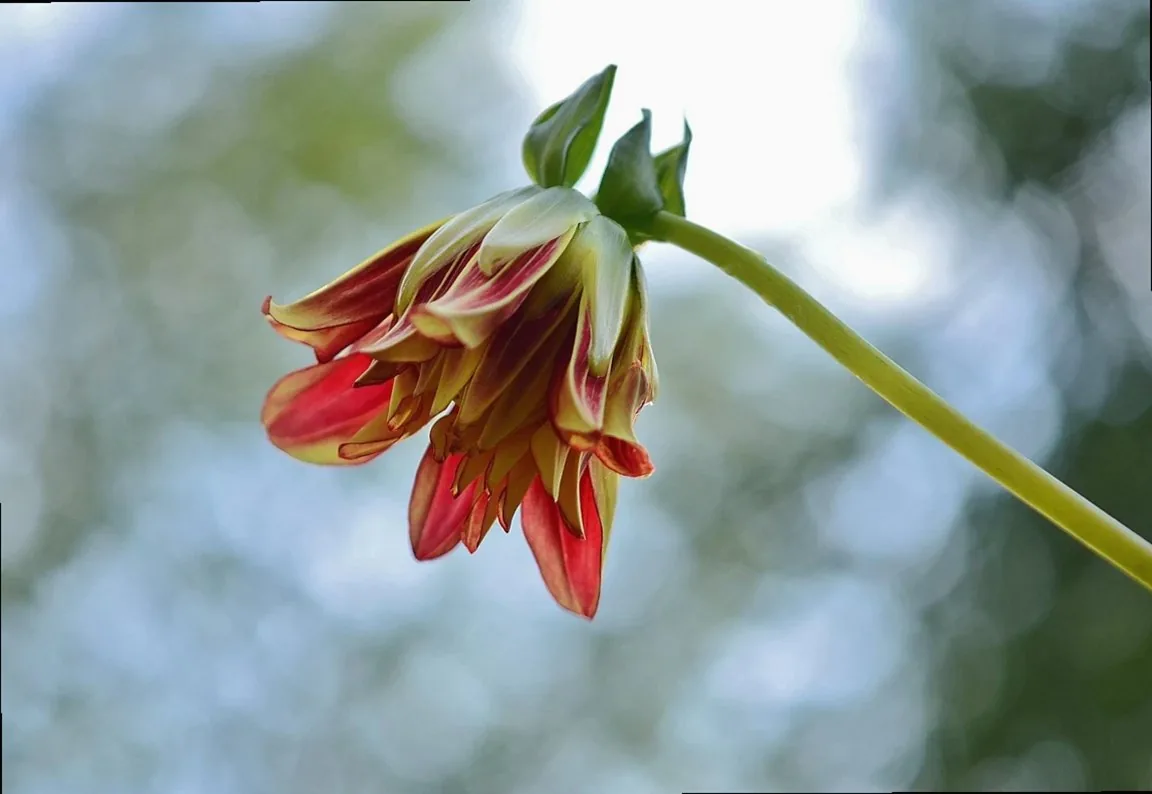
Dahlias are the headline act of British September, and with good reason. UK-grown dahlias — particularly from growers concentrated in Kent, Suffolk, and the Scottish Borders — peak between late August and mid-October depending on variety and latitude. Café au Lait, Black Jack, and the increasingly sought-after Bishop series are all genuinely field-grown at this point, cut fresh and available through specialist British flower markets such as New Covent Garden or directly from subscription growers on platforms like Flowers from the Farm.
Alongside dahlias, the following crops are authentically in season from British soil in early September: statice (Limonium sinuatum) from Cornish growers; rudbeckia in gold and bronze tones; late-season sunflowers, particularly smaller decorative varieties rather than the large-headed Dutch glasshouse types; scabious, especially the pale lavender Scabiosa caucasica and the deeper-toned annual varieties; and a range of grasses and seed heads — teasel, nigella pods, and Briza maxima — which are at their structural best in early autumn. Cosmos, grown outdoors in UK fields, also continues strongly through September, though it will not survive the first serious frost and supply drops off quickly in the north from mid-month.
Hydrangeas deserve their own note. British-grown hydrangeas are genuinely available in September, and the antique tones — the greened-over whites, the dried-at-the-edge blues and pinks of Annabelle and paniculata varieties — are a natural September characteristic, not a sign of poor stock. If a hydrangea is uniformly bright and saturated in mid-September, it is almost certainly Dutch glasshouse-grown or cold-stored, not field-fresh from the UK.
What is almost certainly coming out of cold storage
Peonies are the clearest example. The British outdoor peony season ends in late June. Any peony available in September — unless it is a glasshouse-grown Kenyan or Dutch import — has been in a controlled-atmosphere store for eight to fourteen weeks. Cold-stored peonies can open beautifully, but their vase life is typically three to five days rather than the seven to ten days a fresh-cut peony achieves. The give-away signs are petals that feel slightly papery at the outer edges even in bud stage, and a muted rather than vivid fragrance.
Sweet peas follow a similar pattern. The UK outdoor sweet pea crop finishes by late July in most regions. September sweet peas are either stored British stock, tunnel-grown varieties from specialist growers extending the season deliberately, or imports. Stored sweet peas are particularly fragile — their cell structure does not hold well past about six weeks of cold storage — so September sweet peas should be bought from a named source with a clear provenance rather than from a generic wholesale listing.
Lisianthus, ranunculus, and most spray roses in September are overwhelmingly glasshouse-grown imports, primarily Dutch. That is not inherently a problem — Dutch glasshouse production is technically precise and the flowers are consistent — but buyers who assume they are getting field-grown British stock are paying for a story that does not exist. Asking a supplier directly whether a specific stem is Dutch glasshouse, Kenyan, or British field-grown is a reasonable and increasingly welcomed question.
How to read the signs in a physical stem
Cold-stored flowers carry physical markers that are legible once you know what to look for. The most reliable indicator is stem rigidity: a genuinely fresh-cut stem is firm from base to tip and snaps cleanly rather than bending. Stored stems have often begun to break down lignin at a cellular level and will feel slightly rubbery in the lower third even after a fresh cut and a good drink of water. This is most obvious in dahlias and sweet peas, less obvious in woody-stemmed flowers like lisianthus.
Leaf condition is the second indicator. Fresh-cut British field flowers in September arrive with leaves that are bright and turgid. Stored flowers frequently show leaf yellowing at the base, or a slight translucency in the leaf tissue even after conditioning. Some wholesalers strip lower leaves before sale, which can obscure this — so look at whatever foliage remains near the head of the stem.
Scent is the third, and it is decisive for roses and sweet peas specifically. A field-grown, recently cut rose — particularly a British-grown heritage variety from a grower like Allington Farm in Lincolnshire — will be perceptibly fragrant at arm's length. A cold-stored or Dutch glasshouse rose often has minimal scent even at close range. This is not a quality judgement on Dutch growing; it reflects the trade-offs of commercial glasshouse breeding, which prioritises vase life and transit durability over fragrance. But it is worth knowing before a wedding party walks into a room expecting scented roses.
A September price list can contain peonies cut in May — and there is nothing on the label to tell you so.
How to ask better questions when ordering
Most suppliers respond well to specific provenance questions, particularly those who deal with independent florists or event buyers rather than purely commercial volume accounts. Useful questions include: where the crop was grown, when it was cut, and whether it has been through cold storage. For British flowers specifically, asking whether the grower is a member of Flowers from the Farm — a UK cooperative of around 800 small-scale domestic growers — is a shortcut to establishing genuine field provenance.
- Ask for the country and region of origin, not just the variety name
- Ask specifically whether cold storage has been used and for how long
- Request a cut date or at minimum a dispatch date from the growing site
- For British flowers, check whether the grower is listed with Flowers from the Farm
- For dahlias and hydrangeas in particular, ask whether they are field-grown or polytunnel
- Request sample stems before committing to large event volumes in September
A practical recap for September ordering
The structure of the September British flower market is genuinely complex, and even experienced buyers get caught out when sourcing at scale. The practical rules below are not a complete answer to every situation, but they cover the most common errors made when ordering for events, retail, or home use in early autumn.
- Dahlias, rudbeckia, scabious, cosmos, and late sunflowers are the genuinely British field-grown stars of September — prioritise these
- Hydrangeas in antique tones are a natural September characteristic of field-grown UK stock; uniform bright colour suggests imports or cold storage
- Treat any peonies or sweet peas in September as stored stock unless the supplier names the cut date and source explicitly
- Lisianthus, ranunculus, and most spray roses are glasshouse imports — consistent but not field-seasonal
- Vase life of stored stock is materially shorter; build that into conditioning time and event scheduling
- Grasses, seed heads, and pods (teasel, nigella, Briza) are genuinely at peak quality in September and are almost always British field-grown
September is one of the richest months in the British flower calendar when the sourcing is done with any precision. The mistake is not in wanting peonies or sweet peas — it is in not knowing what the availability list is actually telling you. A grower who is honest about cut dates and storage history is worth more than a supplier with a longer variety list and no paperwork to back it up.